Teachers Pay Teachers AI Ban 2026: What TPT Sellers Need to Know
Understand the reported TPT AI policy change, distinguish announcements from effective rules, and audit your resources with a practical seller checklist.
The reported Teachers Pay Teachers AI ban is a reason to review how your resources are made, not a reason to guess at an enforcement deadline. Separate three things: what TPT has announced, what its current published rules say, and what you can improve in your own products today.
Checked October 25, 2026: Chalkbeat reported on October 15 that TPT plans to prohibit AI-generated teaching resources. Its report describes the policy as forthcoming. This guide does not establish a universal effective date, a grandfathering exemption, or permission for a particular AI workflow.
What has been reported about the TPT AI policy?
Chalkbeat's October 15 report attributes the planned restriction to TPT and quotes a company spokesperson. It also reports that the marketplace is developing detection and removal tools. An announced direction is important, but it is not a substitute for the final wording governing your account.
Before changing a large catalog, read the current TPT Content Guidelines, check official seller communications, and retain dated copies of instructions that apply to you. If a definition remains unclear, ask TPT about the specific activity rather than relying on another seller's interpretation.
An announcement and an effective rule are different
Build a simple policy log with four columns: the source, its publication date, the activity it covers, and any explicit effective date. Keep reported statements separate from the platform's operative terms. A headline mentioning 2026 does not by itself tell you when an existing listing must change.
Do not assume that replacing an AI-generated cover resolves questions about the worksheet inside it. Conversely, do not infer that every ordinary software function is covered identically. Image generation, passage generation, spelling assistance, keyword research, and layout tools perform different jobs; only the platform can define its rule's scope.
This article is an editorial explanation, not an approval decision. TPT may publish more specific guidance after the review date above. Follow the latest official requirements if they differ from this summary.
Start with an inventory of your resources
For each product, record who wrote the instructional content, who created the illustrations, which third-party assets appear, and where the editable source files are stored. Include the answer key, cover, previews, descriptions, translations, and any bonus files. This makes an audit manageable without claiming that a provenance log guarantees acceptance.
Then identify the educational decisions a teacher must own: the learning objective, the sequence of tasks, the level of challenge, the examples, and the assessment. A document can be visually polished while still failing to teach the intended skill. Your audit should examine both origin and classroom usefulness.
For a large store, work in batches. Begin with products you are actively promoting, preserve existing source files, and keep a record of changes. Check the platform's instructions before withdrawing or replacing a live product so buyers retain the access they were promised.
How to create genuinely original educational resources
Begin from a teaching problem you understand. For example, a multiplication activity might help pupils explain equal groups rather than simply complete a page of calculations. Write the objective in plain language, create the tasks yourself, solve them independently, and explain what successful learning looks like.
Build the answer key alongside the student pages. Write a short teacher guide describing prerequisite knowledge, materials, timing, and ways to respond to common misunderstandings. If possible, ask a qualified colleague to use the instructions without your explanation and note where they hesitate.
Originality also means respecting other creators. Check the official TPT intellectual-property policy for the distinction between your own work and incorporated material you have the right to use. Keep commercial-use licenses and attribution requirements with the project. A license and an AI-content rule answer different questions; satisfying one does not automatically satisfy the other.
Ethical AI use still needs human judgment
UNESCO's guidance on generative AI in education emphasizes human agency, privacy, and pedagogical suitability. Those principles support careful review; they do not override marketplace rules.
Do not upload identifiable student work, private school records, or another creator's paid resource into a tool without appropriate permission. If a use is permitted by the applicable platform and school rules, a knowledgeable educator should still verify the result. A fluent explanation can contain a factual error, and an attractive illustration can misrepresent a concept.
Use our separate 10-step resource quality checklist to check answers, spelling, images, accessibility, and final exports. That guide concerns educational quality; this article concerns policy interpretation and provenance.
SEO research is not the same as generating a teaching resource
Researching whether buyers use a phrase such as “place value task cards” helps you describe a resource. It does not establish who authored its questions or whether its illustrations comply with TPT's requirements. Keep the distinction clear when choosing tools and reviewing their outputs.
SpyLore offers keyword research and listing optimization. Use those workflows to improve relevance and clarity around an independently reviewed product. SpyLore does not certify compliance, guarantee a ranking, or grant an exemption from TPT rules. Evaluate any creation feature separately against the current rules before using its output in a listing or resource.
Improve Your TPT SEO With SpyLore
Research relevant keywords, improve listing clarity, and explore tools built for Teachers Pay Teachers sellers. Start with the Free plan and compare the current Pro features and billing terms when you need more.
SpyLore is independent and is not endorsed by TPT. Research tools do not certify resource quality or marketplace compliance.
A practical seller compliance checklist
- Open the current official guidance and record the review date.
- Identify any explicit effective date; do not invent one from a news headline.
- Inventory instructional content, artwork, covers, previews, copy, and translations.
- Record authorship, editable originals, permissions, and asset licenses.
- Check questionable tools and workflows against the actual scope of the rule.
- Rewrite or replace material where the platform requires it, preserving buyer access.
- Independently solve every task and verify every factual explanation.
- Review the exported files, not only the editable project.
- Update previews and descriptions to match the version buyers receive.
- Ask TPT to resolve material ambiguity and keep its response with your audit log.
A useful next step
Choose one product and trace it from learning objective to buyer download. That small audit will reveal whether your main task is documenting authorship, improving instruction, correcting a preview, or clarifying a listing. Avoid making unsupported claims such as “AI-ban approved” in your product copy.
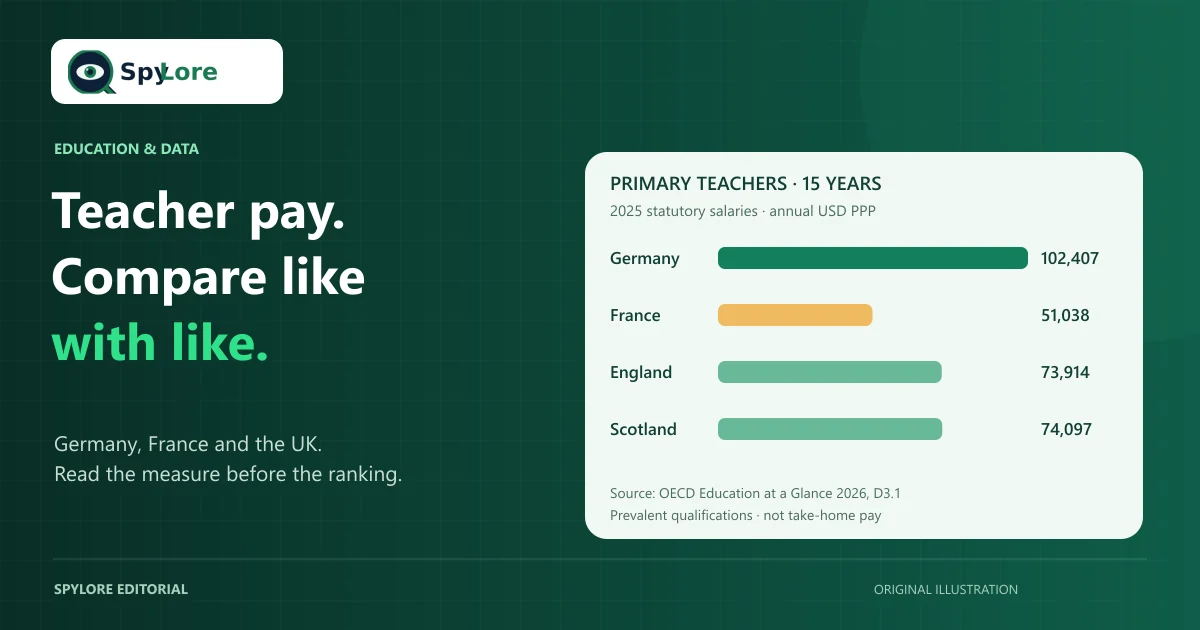
If you make materials for replacement teachers, the substitute lesson-plan checklist offers a concrete way to check usability. For broader professional context, see our carefully labeled European teacher salary comparison. Neither salary figures nor research tools predict seller income.
Improve Your TPT SEO With SpyLore
Research relevant keywords, improve listing clarity, and explore tools built for Teachers Pay Teachers sellers. Start with the Free plan and compare the current Pro features and billing terms when you need more.
SpyLore is independent and is not endorsed by TPT. Research tools do not certify resource quality or marketplace compliance.